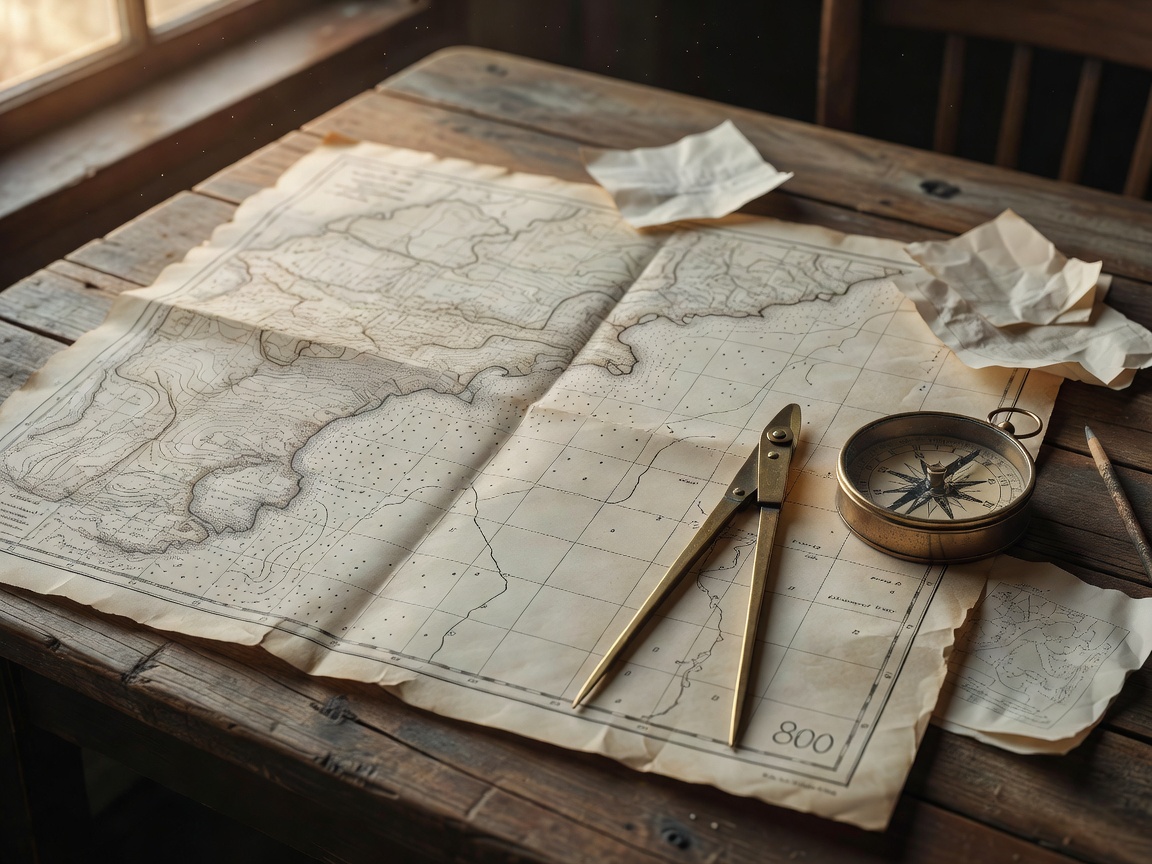
Chart reading and position
Chart work starts with scale, symbols, depths, hazards, aids to navigation and the relationship between plotted position and the real environment. Learners should practise stating position clearly, identifying the next waypoint and explaining why a route changes. Position awareness is continuous; it is not a single calculation.
Traditional and electronic methods
Traditional methods
Paper charts, compass bearings, visual references and written logs develop independent cross-checking.
Useful for: principles and resilient thinking.
Constraint: requires careful plotting and current source material.
Electronic concepts
Digital charts, position sensors, route displays and alarms support monitoring and information sharing.
Useful for: clear presentation and rapid updates.
Constraint: requires correct settings, power and independent awareness.
Route planning decisions
A route discussion should consider the vessel, draft, traffic, weather, tidal information where relevant, local restrictions, safe margins and communication arrangements. Training should focus on why a waypoint exists, what would make it unsuitable and how the plan will be reviewed. Avoid treating a displayed route as an instruction to proceed.
Practical checklist
- Confirm chart source, scale and update status.
- Set a clear departure point, destination and decision points.
- Review weather and local information before activity.
- Cross-check electronic information with other available references.
- Record assumptions, changes and post-session findings.
Good fit for
This module suits beginners who want a structured introduction, sailors moving from local familiarity to planned routes, and crew who need stronger navigation conversations. It supports general skills development. It does not itself confer a formal qualification or legal authority.
What to verify
Ask how much time is allocated to chart work, practical observation, electronic concepts and assessment. Verify the charting tools, vessel equipment, instructor supervision and the treatment of local conditions. Formal requirements vary by activity and jurisdiction.
Continue with marine operations or compare formats in the course selection guide.